Ashit Vora runs electrical contracting projects worth between one crore and twenty crores. He was 64 when he joined the programme. He had never written a line of code and had no ambition to start.
He now describes himself as his company's Chief AI Officer rather than its CEO. That was his phrase, not mine, and he started using it before he had built anything significant.
The order matters. Most owners wait until they have a working system before they change how they think about their job. Ashit did it the other way round, and the three systems below are what came out of it.
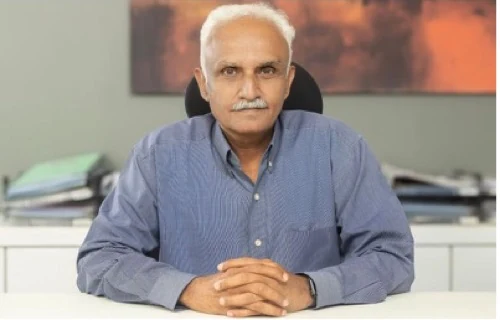
What changes when you call yourself Chief AI Officer?
Quick Answer: The question you ask changes. A CEO asks who should handle a task. A Chief AI Officer asks whether the task needs a person at all. Ashit began running every recurring decision through one filter: can this be done better, faster or more profitably than the way we do it now?
The title sounds like branding. In practice it is a filter, and it is the only thing on this page you can copy today without spending anything.
Before the shift, a problem in his business had two possible answers: do it himself, or give it to somebody. Both answers end in a person doing the work. The filter adds a third answer, and once it exists you start noticing how much of the week is spent on tasks nobody chose, that simply accumulated.
Ashit ran it across the whole operation and found more than thirty recurring tasks that qualified. He did not attempt all thirty. He built three systems, and those three now return more than 60 hours a month.
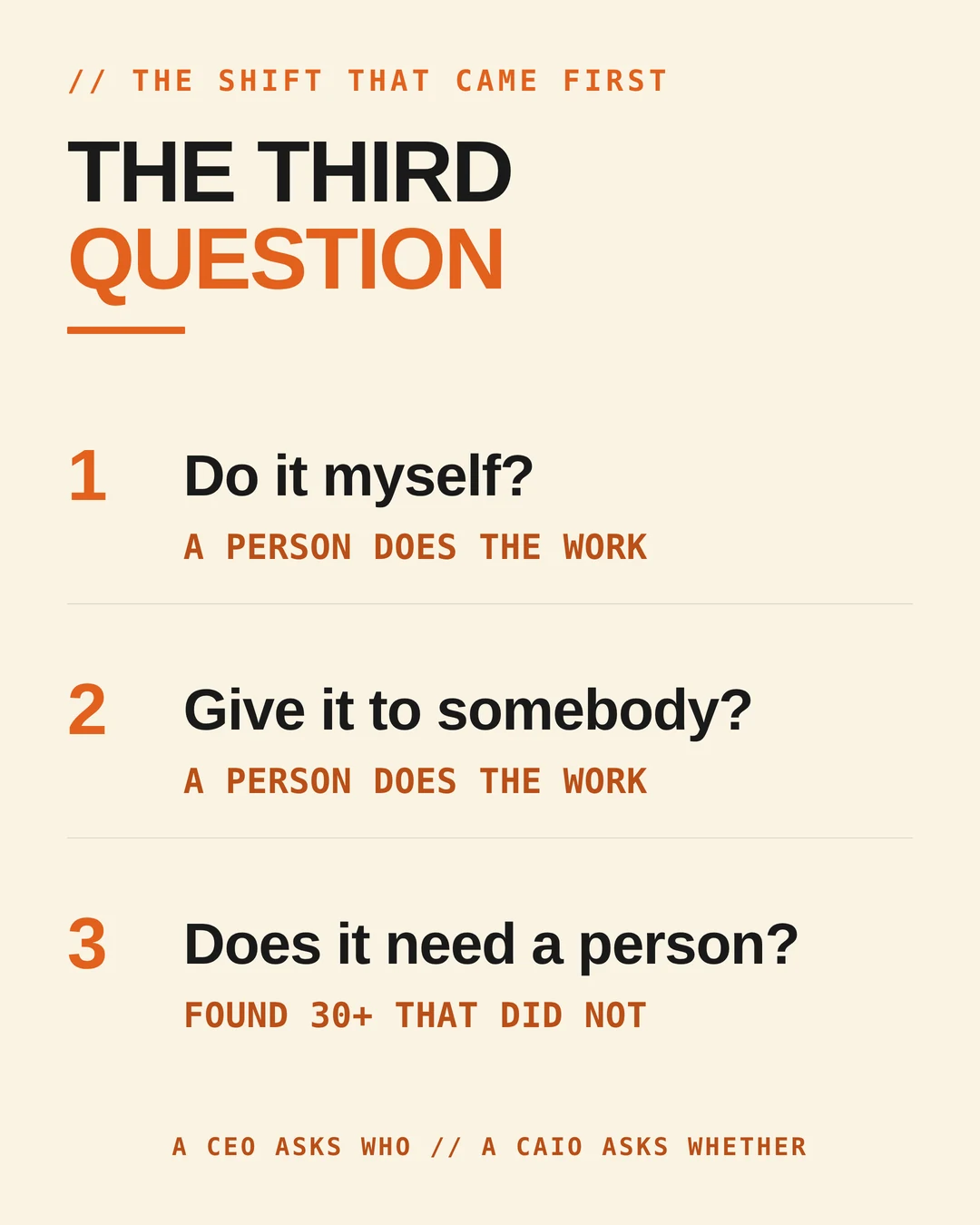
Your first action: Take the next recurring decision that lands on you this week and ask the third question before the first two. Not who should do this, but whether it needs doing by a person.
How do you get site data into a spreadsheet without someone typing it?
Quick Answer: Ashit built a Telegram bot. His site teams photograph the delivery note where they stand, the bot reads it in whichever language it was written in, and the spreadsheet updates itself. That one system returns more than 40 hours a month.
This was the first build, and it was deliberately the dullest problem he had.
On every site his ground team took delivery of expensive materials and wrote the notes by hand. Sometimes Marathi, sometimes Hindi, sometimes Gujarati, sometimes English, depending on who was holding the pen. Somebody in the office then spent three hours a day photographing those notes, typing them out and updating the spreadsheet so Ashit could see what had arrived and what had been used.
Twenty-one hours a week of a person's working life spent moving information from paper into a spreadsheet without changing any of it. And every delivery that slipped through untracked was margin walking quietly out of the door.
The bot does not do anything clever. It reads handwriting in four languages and writes numbers into cells. What makes it valuable is that it never forgets, never leaves at six, and never has a backlog on a Monday.
He picked the most boring problem in the business on purpose. That is the part people skip.
Your first action: Find the task where somebody moves information from one place to another without changing it. That is your first build, and it will feel too small to bother with.
Can AI produce a monthly MIS report from Tally?
Quick Answer: Yes. Ashit's monthly MIS pulled from eleven separate Tally files and took seven days to produce. It now takes fifteen minutes. That is a full working week returned every month, from a report he was already producing.
The MIS was the second build, and it is the one that changed how he ran the company rather than how many hours he had.
Seven days a month. Eleven Tally files, reconciled by hand, every single month, to produce a picture of a business that had already moved on by the time anyone read it. That is the hidden cost nobody puts in the accounts: not just the week, but the fact that every decision made from that report was looking at a business as it had been a week ago.
Fifteen minutes changes the nature of the thing. A report that takes seven days is a monthly ritual. A report that takes fifteen minutes is something you run when you want to know.
Your first action: Time your monthly reporting honestly, including the reconciling nobody logs. That number is the budget for building the thing that replaces it.
Can AI run a performance review?
Quick Answer: Ashit built an appraisal system that tracks tasks in real time, so a performance review reads from a year of recorded work rather than from what anybody remembers. The judgement stays human. What AI removed was the reconstruction.
The third build was the one nobody expects on an AI list, because appraisals feel like the human part of running a company.
They are, and that is precisely the argument for building this. A performance review conducted from memory is not a human judgement, it is a guess dressed as one. It is weighted towards whatever happened in the last six weeks, and towards whoever is best at describing their own contribution.
Tracking the work as it happens means the conversation starts from a record instead of an impression. What the appraisal is for, deciding what somebody is worth and what they should do next, stays entirely with Ashit. The system does not make that call and was never asked to.
Your first action: Before your next appraisal round, write down what you actually know about that person's year without opening anything. The gap between that and their real twelve months is what this fixes.
Where should a non-technical owner start?
Quick Answer: Run every recurring task through four gates. Is it repetitive, is it structured, does it take more than fifteen minutes, and does it make or save money. Four yeses and it is worth building. Three or fewer and it waits.
The Chief AI Officer question tells you whether a task needs a person. It does not tell you which task to do first, and that is where most owners stall. The four-way test settles the order.
- Is it repetitive? The same shape of work, again and again.
- Is it structured? Clear input, clear output, clear steps in between.
- Is it time-consuming? More than fifteen minutes an instance, often enough that the hours add up.
- Does it make or save money? Either directly, or indirectly by handing back the hours you would have spent earning it.
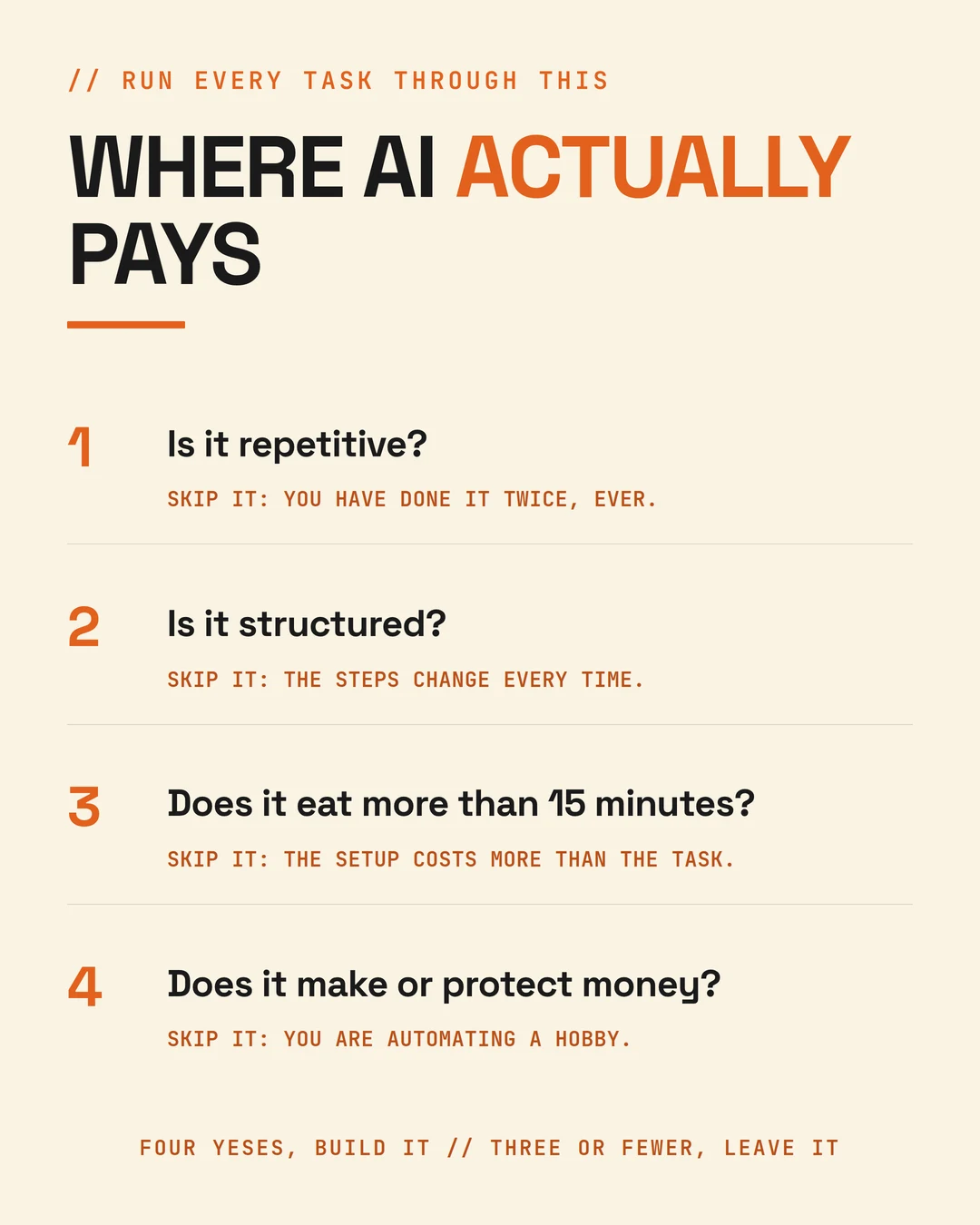
All three of Ashit's builds clear all four gates, which is precisely why they were the three he built. The delivery notes were repetitive, structured, twenty-one hours a week, and every untracked delivery was margin leaving the business. The MIS was structured across eleven Tally files, seven days a time, and it governed decisions about money. The appraisal system replaced a year of remembering with tracking that happens daily, structured, and it decides what people get paid.
The fuller version of this test, with the four agents worth building first, is in how to run your business on AI.
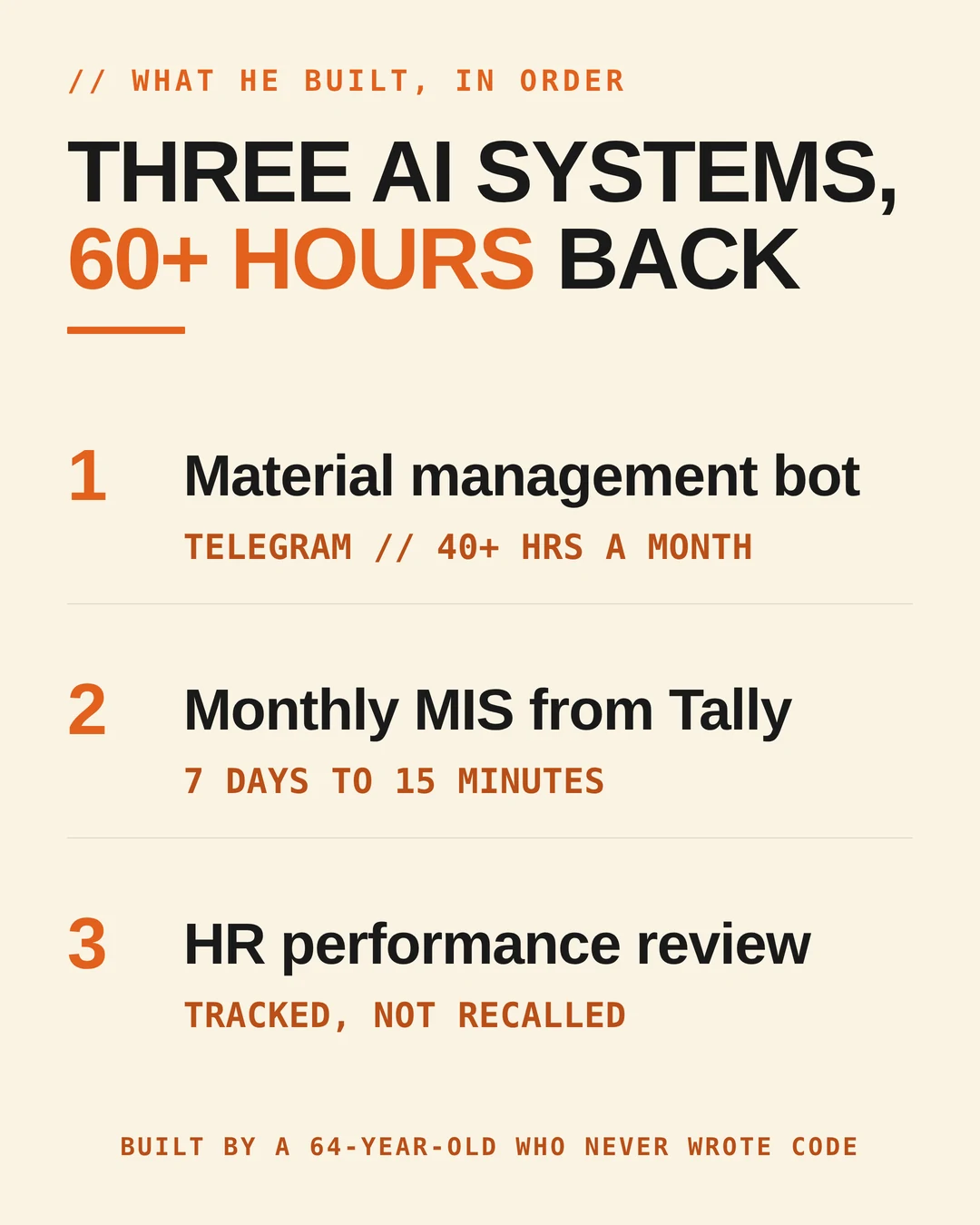
Nothing here required Ashit to write code, and nothing here started with a strategy document.
The compounding is the part owners underestimate. The hours the first bot returned were not a saving, they were capital. They bought the time to build the second thing, which bought the time to build the third. Had he started with the most ambitious idea he would have had no hours to fund it with, and the first build would still be unfinished.
He also built all three himself, in live sessions, on his own business data. That matters more than it sounds. Nobody handed him a finished product to operate, so when something needed changing he could change it.
You can look him up at linkedin.com/in/ashit-vora-21827ba.
Your first action: List ten tasks that happen in your business at least weekly and mark each one against the four gates. The four-yes rows are your queue, in the order they scored.
FAQ
Do I need to be technical to build systems like these?
No. Ashit was 64 with no coding experience and built all three himself on his own business data. What the work does require is four to six hours a week you can genuinely protect, and that constraint stops far more owners than any technical one.
What is a Chief AI Officer in a small business?
Not a hire. It is the owner deciding that every recurring task in the company gets tested against one question before a person is assigned to it: can this be done better, faster or more profitably than the way we do it now. In Ashit's case the owner and the Chief AI Officer are the same man.
How long did the three systems take?
The first returned hours within the first month. The management report followed, then the appraisal system. He did not build them in parallel, and the sequence is the reason it worked.
Does AI decide who gets promoted?
No, and it should not. The appraisal system records what happened across the year so the review starts from evidence rather than recall. Deciding what somebody is worth stays with Ashit.
Is this only relevant to construction?
The industry is incidental. Multilingual handwritten notes, a monthly report assembled from too many files, and appraisals run from memory exist in most businesses over a certain age. The delivery note is the local detail, not the point.
If you want to work out where this would start in your business, book a call. If you would rather read first, the diagnostic is in how to run your business on AI.